Trees may look healthy on the outside, but hidden decay can compromise their strength and stability. Internal decay often develops undetected, weakening tree structures and increasing the risk of failure.
Our advanced decay detection services use specialised tools, such as ERT and Sonic tomography and Microdrill assessments, to locate areas of hidden dysfunction. Early detection allows for targeted interventions that can preserve tree health and reduce safety risks. We provide detailed assessments that help property owners and managers make informed decisions.
Whether you are responsible for a public space, private garden, or commercial property, we can help you manage tree health proactively. Our services promote safer environments while preserving the beauty and ecological value of trees where possible. Trust us to uncover hidden issues and provide expert solutions.
Picus Sonic Tomography
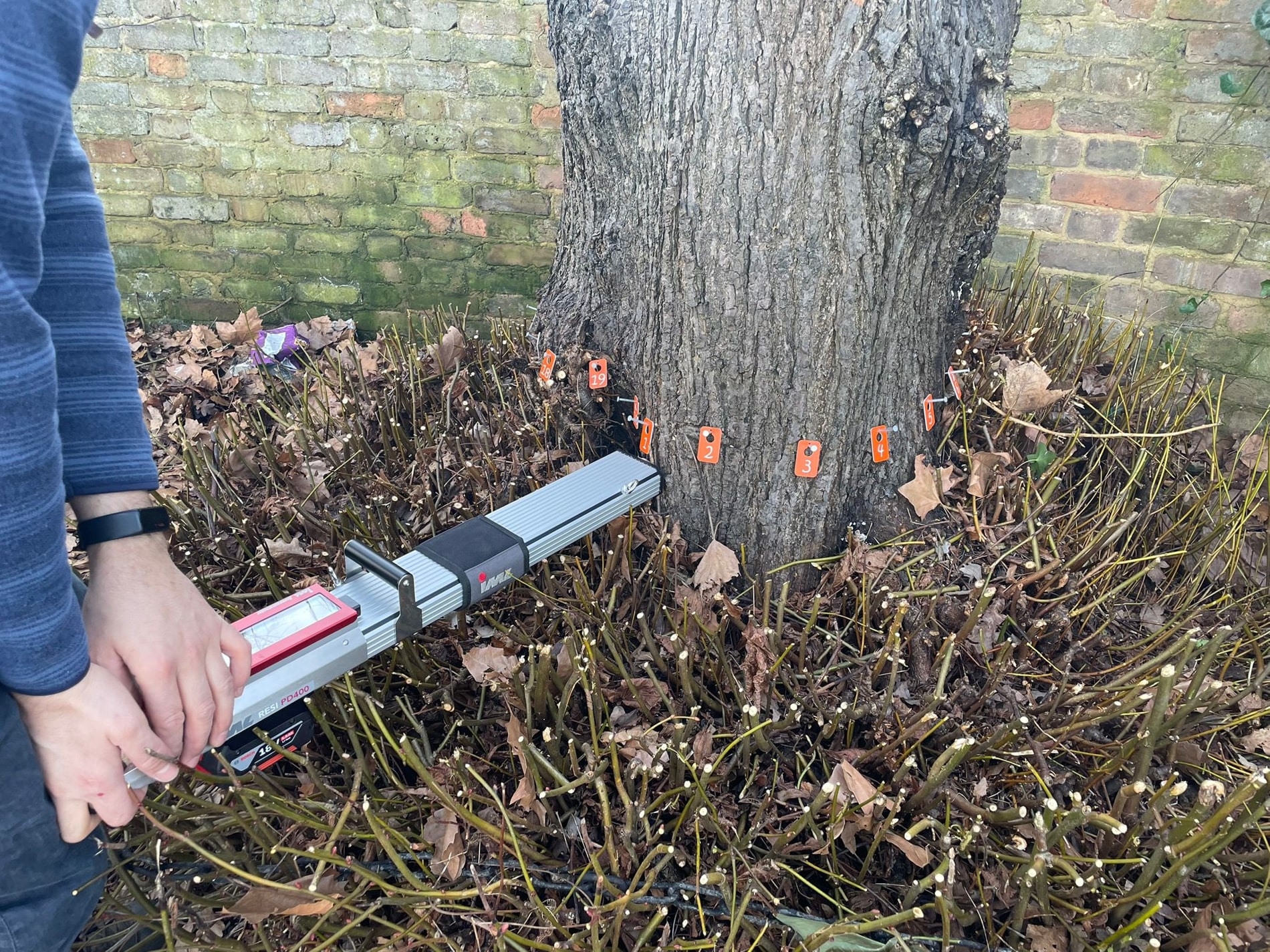
Sonic tomography uses a sound wave sent by transmitters through the tree to receivers. A strap is placed around the stem of the tree which houses the transmitters and sensors.
These are attached to nails which have been gently tapped into the tree in equal measures around the stem. Sound waves are then sent from transmitter to receiver by tapping each sensor gently with an electronic hammer. The sound wave will travel faster through healthy wood and will be slowed by decay.
The time it takes for the signal to reach the receiver is measured and displayed and this information is compared to the ideal transit time for the species and diameter of the stem being subjected to testing. Where cavities are present the sound wave travels through the wood in a non-direct route and this signal takes longer.

Picus Sonic Tomography
Microdrill Assesssment
Microdrill Assessment
Our IML Resistance microdrill is employed to gather detailed information about the extent of decay in relation to the remaining wall thickness of the tree. The resistance microdrill is a specialised device designed to identify and evaluate decay and defects in both standing and dead wood.
It consists of a battery-powered, fully integrated drill with both feed and rotation sensors, equipped with a very fine bit (1.1mm in diameter with a flat 3mm tip) that can penetrate trees up to 40cm deep. Notable reductions in drilling resistance are indicative of decay.
While resistance to drilling does not provide a complete measure of wood strength, it typically decreases significantly when the wood is compromised by decay.
TreeTronic ERT Assessment
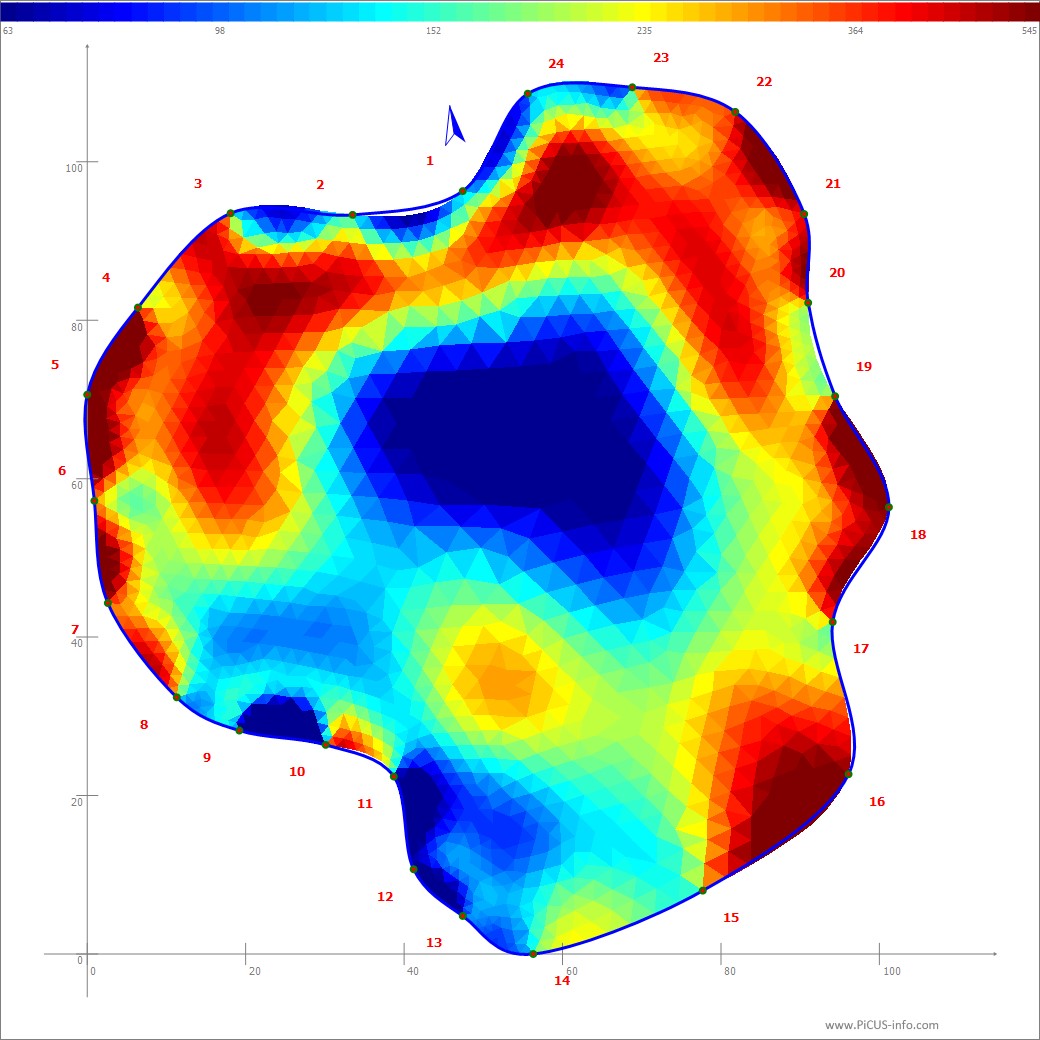
Electric Resistance Tomography uses a voltage applied to the same ring of nails used in the SoT inspection and records the resistance between the individual measuring points. Resistance is influenced by water content, cell structure, ion concentration, and other factors in wood.
By comparing the resistance distribution pattern of the subject tree to a normal reading for the tree species defects and anomalies in the tree can be identified. This information can be used to confirm SoT assessments as well as identify defects not picked up by the sonic tomography.
TreeTronic ERT Assessment
Climbing Inspection
Frequently Asked Questions
All trees have a life long relationship with fungus. Some fungi will lead to internal decay and others will not. Most of this is hidden from view and can be difficult to assess or manage without specialist equipment.
Advanced decay detection, also known as internal investigation, involves specialized techniques to assess the internal condition of trees. These methods are crucial for identifying hidden defects such as internal decay, cavities, and structural weaknesses that are not visible through external inspection.
This will depend on many factors including the species, target area, significance of internal decay and statutory protection status.
Contact one of the team at AFA Consulting and we can provide guidance.
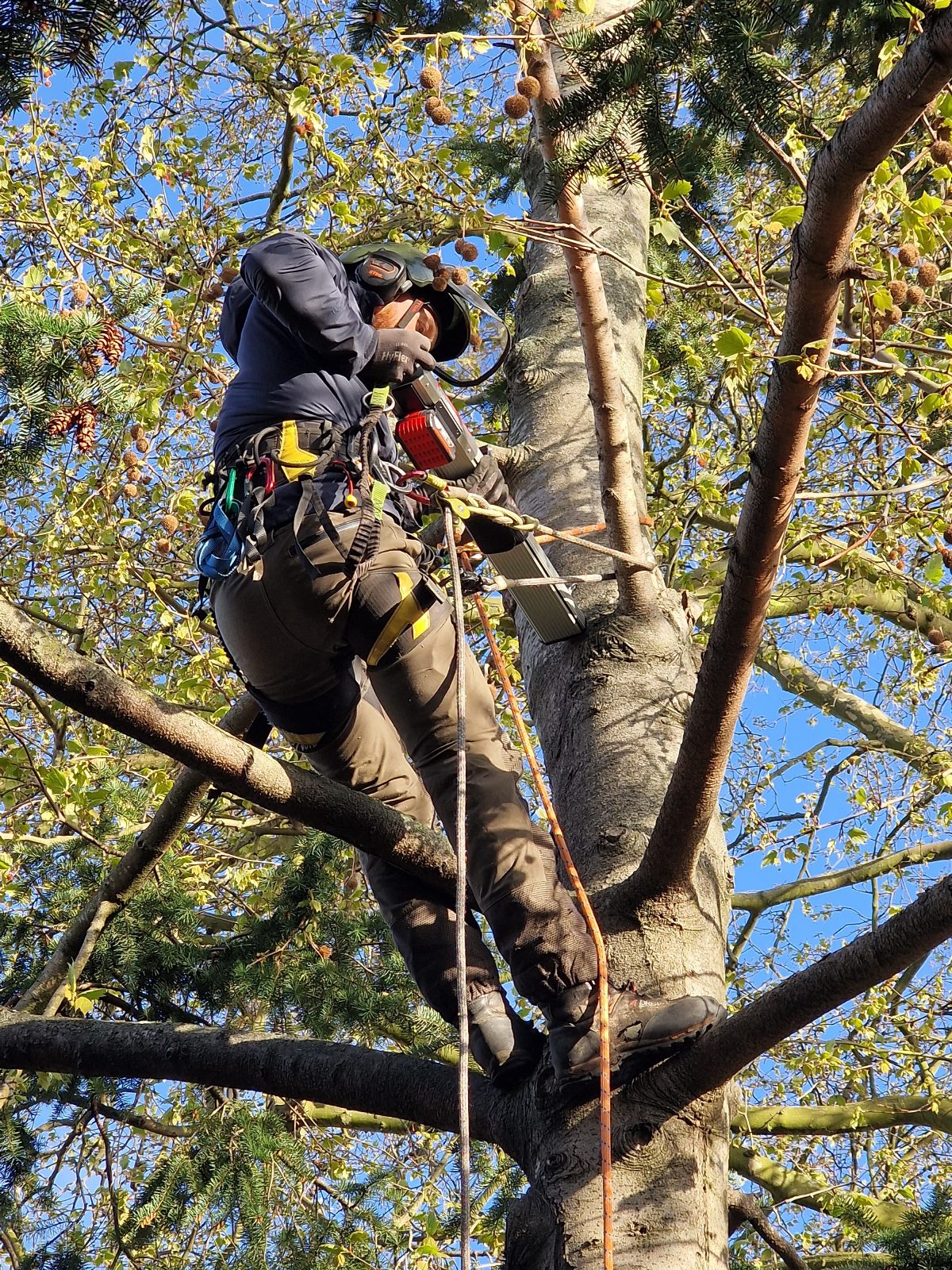
An aerial (climbing) inspection is very useful for identifying potential hazards within the canopy which can’t always be seen from ground level.